
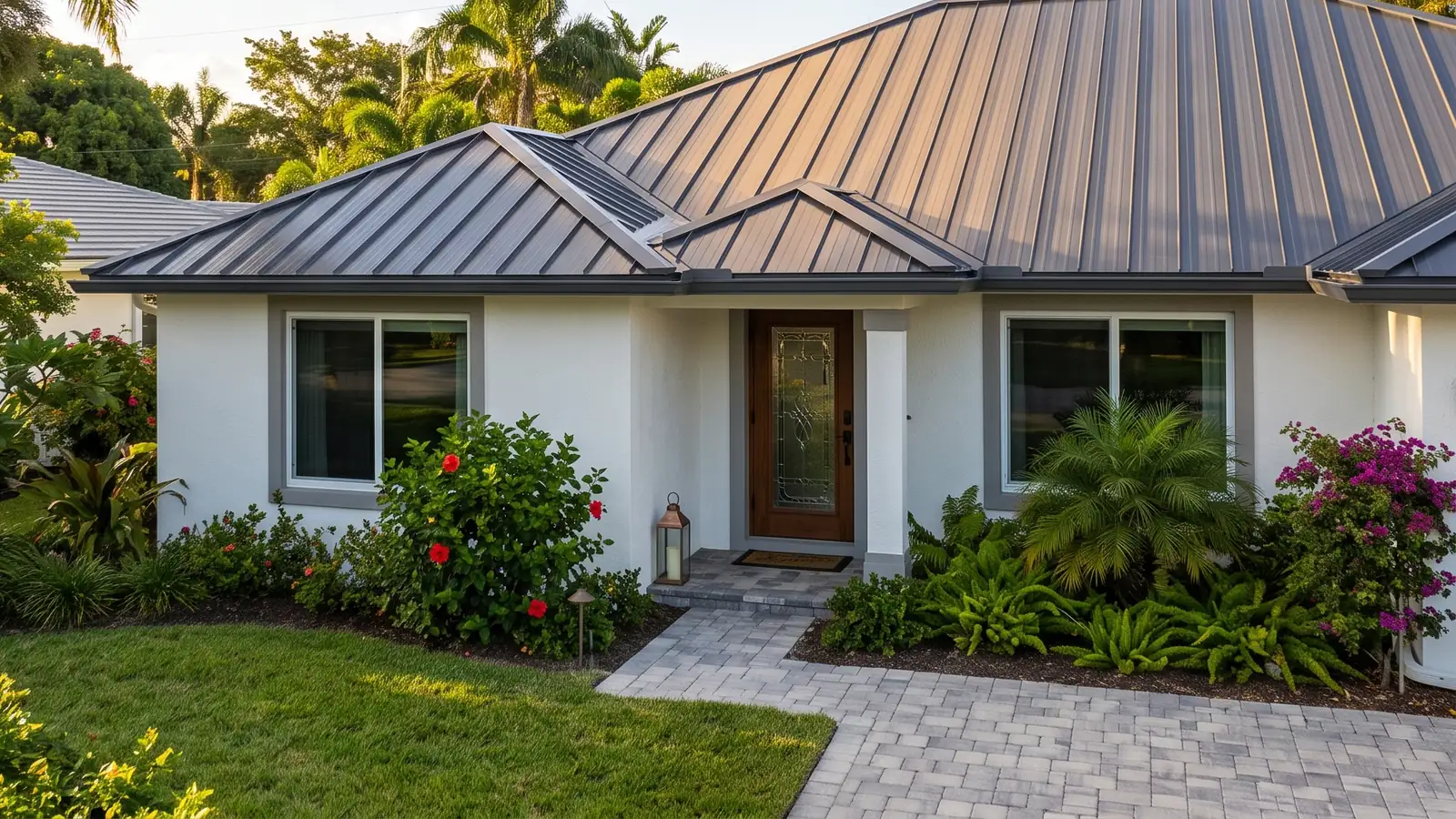
Stone-Coated Steel Roof Profiles
The stone finish is the same across a manufacturer's range. What changes is the shape the steel is pressed into, and that decides how the roof reads from the street and how much it costs.
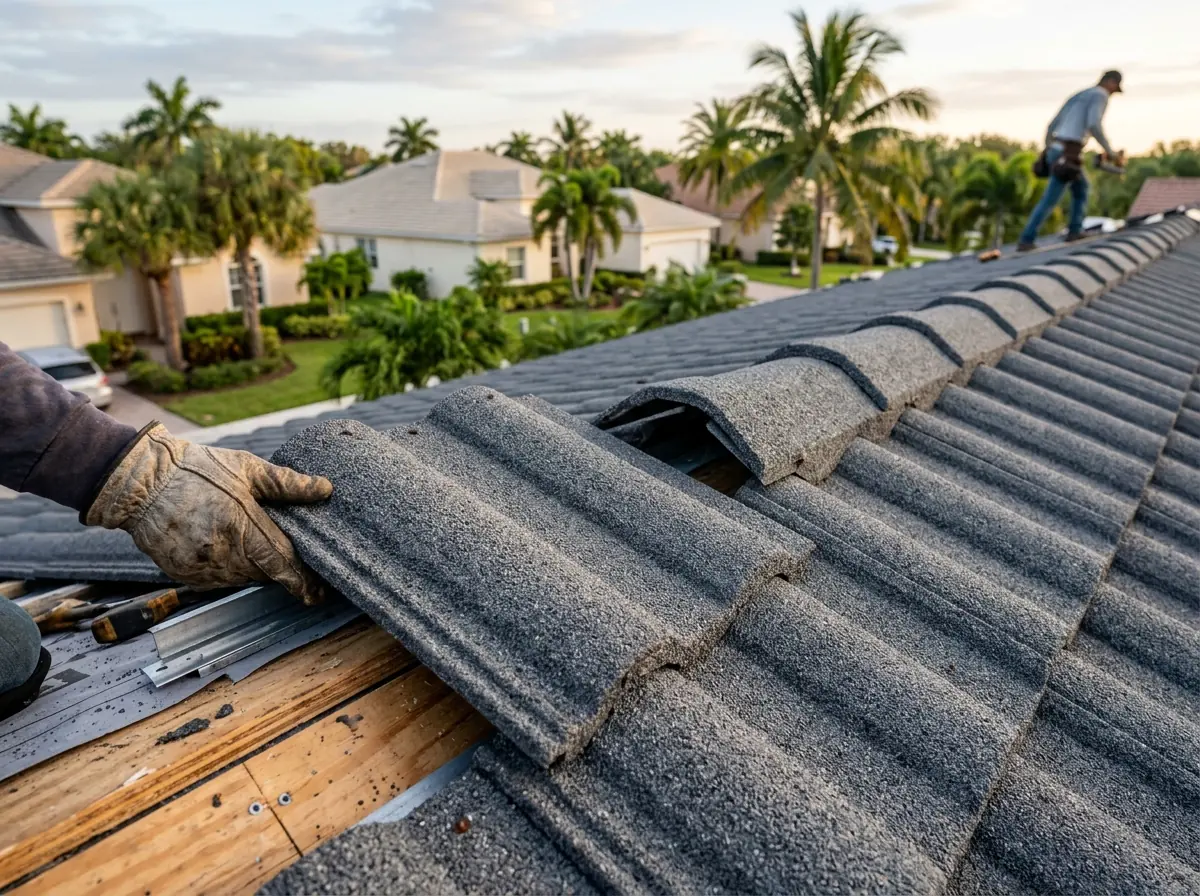
Barrel Tile Profile
This profile makes sense on a lot of Hollywood streets because it matches the concrete and clay barrel tile already on so many houses here. Each panel covers a run of several tile humps, so there are far fewer pieces than on a tile roof, and the granules give it the flat, sandy texture of real tile rather than the sheen of paint. Tile profiles sit at the top of the stone-coated price range; national cost guides say shingle styles are usually the cheapest (HomeGuide).
On a Spanish or Mediterranean-style house, or in a community whose rules call for a tile look, this profile is usually the reason stone-coated steel is on the table at all.
Shake Profile
The shake profile has a rough, split-wood face and a heavier shadow line than the barrel. It suits Old Florida and cottage houses where cedar would be the traditional choice but wouldn't last long in our humidity. The granules hide scuffs and small dings well, which helps on a roof that sits under trees.
Shingle Profiles
Flatter panels made to look like dimensional asphalt shingles. They're the least expensive stone-coated option and the easiest to mistake for a conventional shingle roof, which makes them a quiet upgrade on a house where the owner wants metal but the street wants shingles. If you like that look but would rather have a smooth painted finish, compare metal shingles, which are pressed the same way without the stone coat.
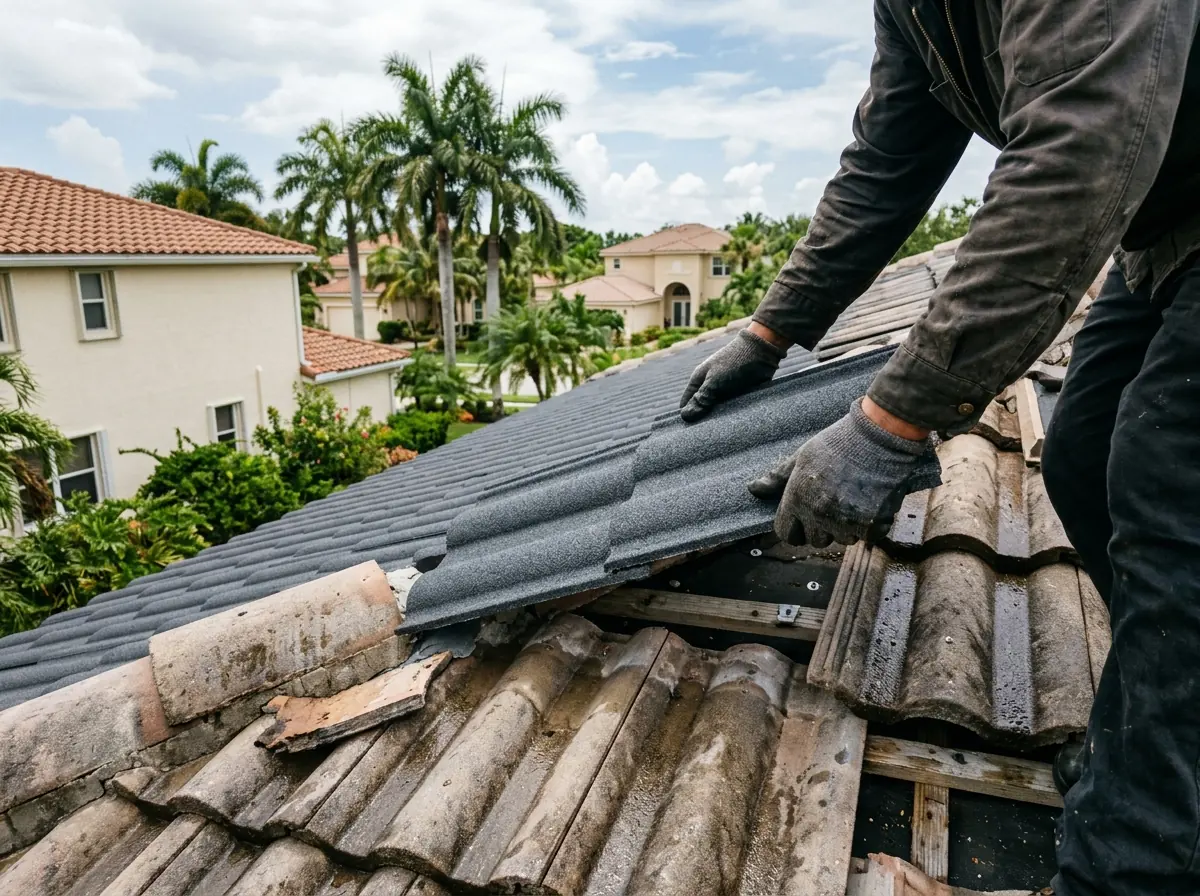
Stone-Coated Steel Repairs and Replacement Panels
A single damaged panel can usually be lifted out and replaced without disturbing the whole slope, because the panels overlap in courses rather than running from eave to ridge. Color is the problem. A new panel's granules will look brighter than panels that have had years of Florida sun, and manufacturers change their colors and profiles over time. Ask the contractor to confirm the profile and color are still available before the repair is scheduled.
Walking on the panels can dent them. Stepping in the wrong spot can dent a panel (HomeGuide), so anyone working on the roof, including an HVAC or solar crew, should know where to step. For leaks and storm damage on any metal roof, see metal roof repair.
Why Hollywood homeowners call Hollywood Metal Roofing
- Free written estimate
- Panel, gauge and product approval listed in writing
- City of Hollywood permit and inspections
- One local metal roofing contractor, not a call list
- No charge to homeowners for the referral
Stone-Coated Steel vs Concrete Tile
If your house has concrete tile now, this is the comparison that decides the job.
Weight
One manufacturer's spec sheet lists installed weights of about 150 to 160 pounds per 100 square feet, roughly 1.5 pounds per square foot. The same manufacturer puts clay or concrete tile at up to about 6 to 11 pounds per square foot. That gap matters on an older house whose framing was never sized for tile, or when a tile roof is being replaced and the owner doesn't want to keep loading the trusses.Look
From the curb, a barrel-profile stone-coated panel and a concrete barrel tile look alike. Up close, the steel panel is thinner at the edges and more uniform.Breakage
Concrete tile cracks when someone walks on it or a branch lands on it. Steel doesn't crack, though it can dent.Repairs
Matching an old concrete tile can be hard, and so can matching a sun-faded stone-coated panel. Neither is a simple swap once the roof has aged.Salt air
Concrete doesn't rust. Stone-coated steel is still steel under the granules, and at least one major maker's coated-steel warranty excludes salt-spray exposure. Within sight of the ocean or the Intracoastal, read the warranty terms for your address before you choose it over tile.Algae
Both roofs can grow algae and mold in our humidity; the cost guide lists it among stone-coated steel's drawbacks. A north-facing slope under trees will need occasional cleaning either way.Cost
National guides put stone-coated steel at about $7 to $13 per square foot installed and concrete tile at about $7 to $19, so the two overlap (HomeGuide).
How Stone-Coated Steel Goes On in Broward
The approval document decides the method, so it's the first thing to ask for. A current Miami-Dade Notice of Acceptance for one major stone-coated system (NOA 23-0207.04) shows how this works. It lists aluminum-zinc coated steel panels on a wood deck. Some of its profiles go on 2x2 wood battens screwed through the underlayment and deck into the trusses, on roofs of 3:12 slope or steeper; others, including a tile and a shake profile, fasten directly to the deck at 2:12 or steeper. So the same look can come in either method, and the approval for the exact product settles it. The underlayment has to be at least the type the NOA names, or another underlayment with its own current NOA.
In practice the job runs like this. The old roof comes off. The deck is renailed and any bad plywood replaced. Underlayment goes down. Then come battens where the system uses them, and the panels are laid from the eave up, each course overlapping the one below and screwed to the battens or deck at the spacing the NOA requires. Hip, ridge and rake trim finish the edges.
Two things worth checking on the estimate. First, battens cost more than direct-to-deck because of the added lumber and labor. Second, NOAs expire; the one above runs to January 2029. Ask for the number, open the PDF, and confirm your profile is listed and the approval is current.
Stone-Coated Steel Roofing Cost
National cost guides put stone-coated steel at about $7 to $13 per square foot installed, or $12,200 to $25,900 for an average job (HomeGuide). Those figures aren't specific to Hollywood, and an HVHZ-approved system, tear-off of concrete tile and deck repairs can all move a local quote well away from the national middle.
What moves the price:
Profile
Barrel tile costs more than shake, and shake more than shingle.Battens or direct to deck
Battens add lumber and labor.Tear-off
Removing concrete tile is heavier, slower work than stripping shingles.Roof shape
Hips, valleys and penetrations mean more cutting and trim.Deck condition
Nobody knows how much plywood is bad until the tile is gone, which is why the estimate should state what each replaced sheet costs.
When we pass your request on, we ask the contractor to put the profile name, color, NOA number, installation method and underlayment on the written estimate. With those five items in hand you can line up two stone-coated quotes and see whether they're pricing the same roof, or whether one is cheaper because it's quietly a different profile on a different installation method.
If budget is the main concern and you don't need the tile look, compare against standing seam metal roofing or a metal shingle quote on the same roof.