
Metal Shingle and Metal Tile Styles
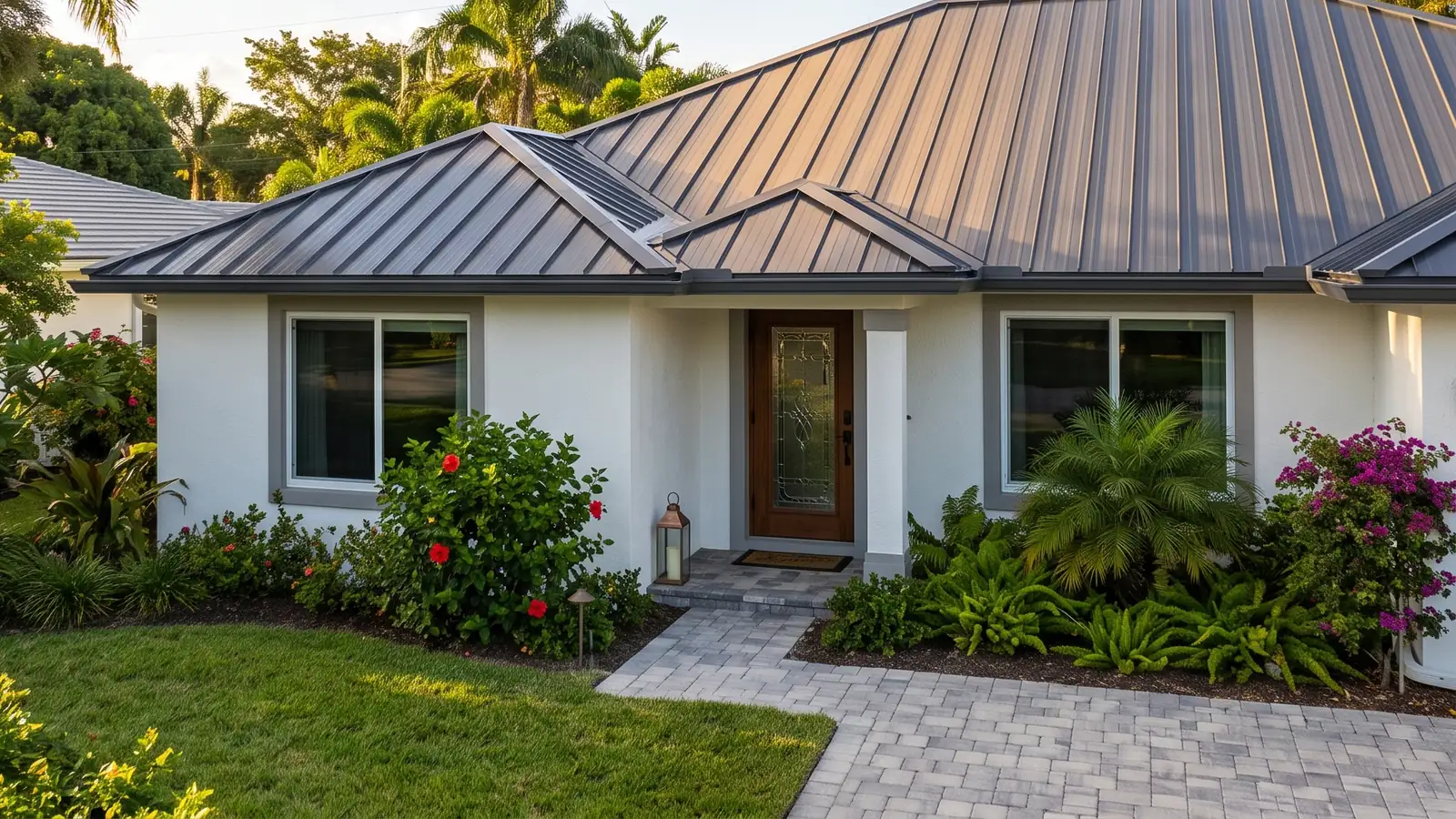
Every metal shingle starts as a flat sheet stamped into a shape, so the style you pick is really a choice of what the stamping imitates. Here is how the main families differ on a Hollywood house.
Metal Shingles That Look Like Asphalt or Slate
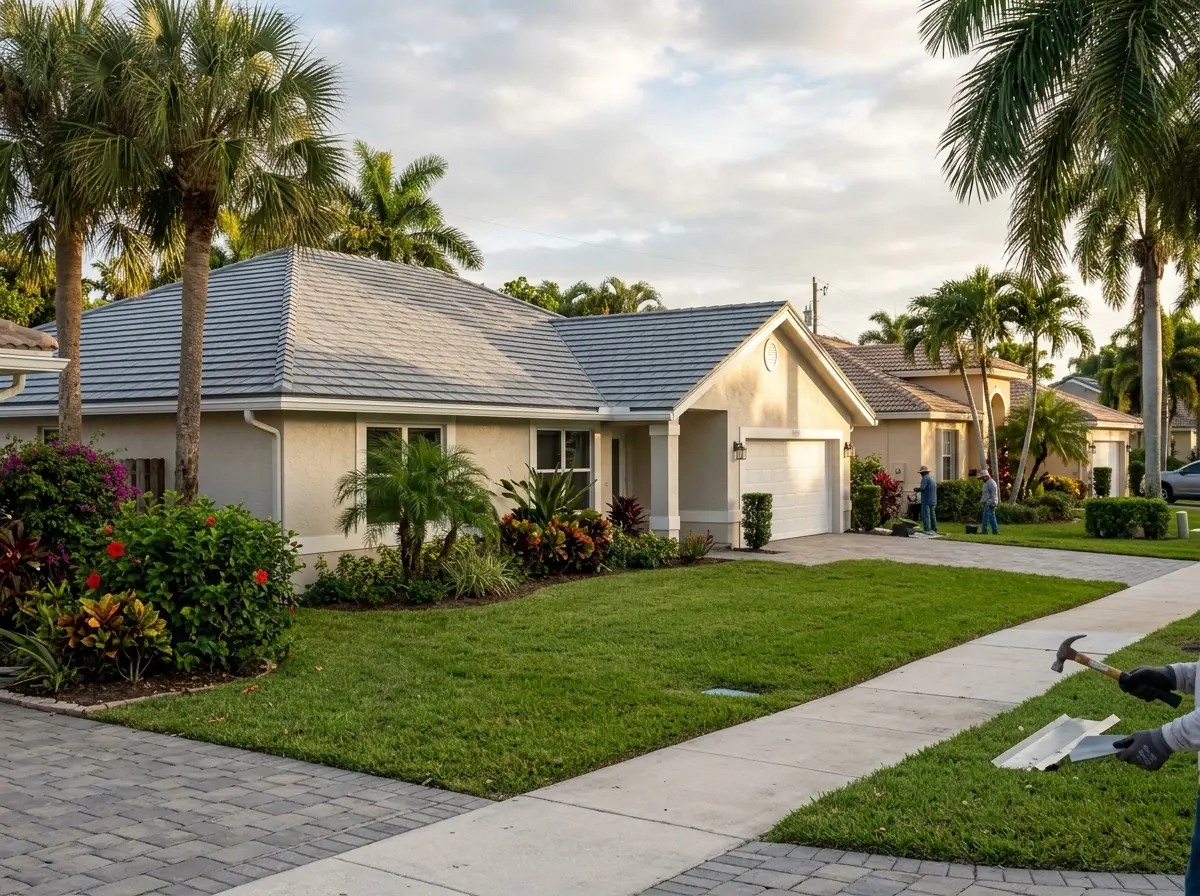
These are the flattest profiles. A slate pattern gives each piece a slightly chiseled face and a crisp shadow line, and an asphalt pattern mimics the tabs of a dimensional shingle. Both suit ranch houses and the low, wide hip roofs common across South Florida, where a standing seam roof can look too commercial for the street.
Each piece is far smaller than a roof panel and locks into the pieces around it. That makes them easy to work around hips, valleys, skylights and dormers without the long cuts a full-length panel needs. It also means more joints. Every one of them depends on the interlock and the underlayment beneath it, so the quality of the install shows up here more than on a roof with fewer pieces.
Metal Shake Profiles
Shake profiles copy split cedar, with a deeper, rougher face and irregular butt edges. You see them on Key West and cottage-style houses where the owner wants a wood look without wood's appetite for rot and termites in a humid climate. The deeper texture also hides minor dents and debris marks better than a flat slate face does, which is a practical point on a lot with big trees.
Metal Tile Roofs
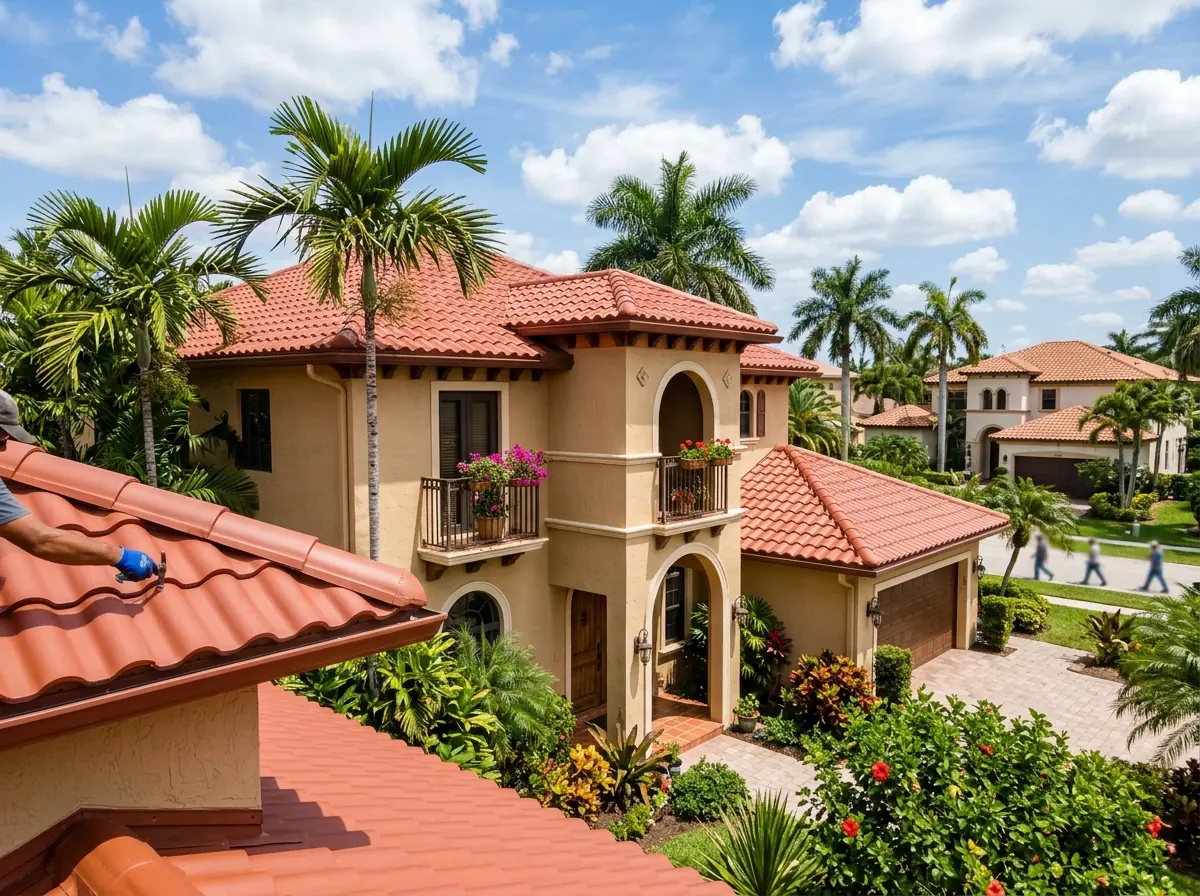
Metal tile is pressed into the rise-and-fall shape of barrel or Spanish tile, usually in wider pieces that cover several "tiles" at once. On a Mediterranean Revival or Spanish-style house it keeps the silhouette the neighborhood expects. The painted versions have a smooth finish with a slight sheen. If you want the matte, grainy look of real clay, that's a different product with a stone granule coating, and it has its own page.
Aluminum vs Steel Metal Shingles
Most metal shingles are aluminum or steel (HomeGuide). In the HVHZ, Florida Building Code section 1518.9 sets the floor: 26 gage for steel shingles, with a G-90 zinc coating, and 0.025 inch for aluminum. National cost guides put steel shingles at about $6 to $13 per square foot installed and aluminum at about $6.70 to $16.
Steel is stiffer and costs less. Aluminum dents more easily but doesn't form red rust, and it's the one we'd lean toward east of US-1 or anywhere the roof catches spray off the Intracoastal. Whichever you choose, the trim and fasteners should match it, because steel screws in aluminum shingles corrode in salt air. If you'd rather have seams than shingles, aluminum comes in panels too; see aluminum roofing.
Why Hollywood homeowners call Hollywood Metal Roofing
- Free written estimate
- Panel, gauge and product approval listed in writing
- City of Hollywood permit and inspections
- One local metal roofing contractor, not a call list
- No charge to homeowners for the referral
How Metal Shingles Are Installed in Hollywood
A metal shingle job starts the same way as any reroof in Broward: the old roof comes off, the contractor checks the plywood, and soft or delaminated sheets get replaced before anything else happens. From there the details depend on the product, and the product's approval document spells them out.
Underlayment first
The approved system names the underlayment, and in the HVHZ that underlayment is part of the approval, not the roofer's personal preference.Direct to deck or on battens
Many metal shingles fasten straight through the plywood. Some profiles, tile styles especially, sit on wood battens that raise them off the deck. Battens add material and labor, and the approval states which method a given profile is tested for.Interlocking courses
Installation starts at the eave and works up the roof, each piece hooking over or into the course below and fastening through a hidden flange, so the screws or nails end up covered by the next row.Trim at every edge
Hips, ridges, rakes and valleys get matching formed trim. On a cut-up roof there's a lot of it, and it's where a rushed crew leaves gaps.
Ask the contractor for the product approval number before you sign. Section 1518.9 of the Florida Building Code requires approval for the complete metal system, panel or shingle plus underlayment and accessories, and in practice that means a Miami-Dade Notice of Acceptance or a Florida Product Approval listed for HVHZ use. A shingle sold nationally isn't automatically approved here, so look the number up yourself.
The job closes out with the City of Hollywood's final inspection. File the permit and the approval number together afterward. The wind mitigation inspector who fills out form OIR-B1-1802 for your insurer documents the roof covering with the permit date, the product approval number or the year of installation.
Metal Shingles vs Standing Seam vs Asphalt
These three end up on the same shortlist more often than you'd think. National cost guides give the rough order (HomeGuide): asphalt is cheapest, metal shingles run about $6 to $14 per square foot installed, and standing seam about $9 to $16.
Look
Metal shingles read as a traditional roof from the street. Standing seam shows long vertical lines. Asphalt looks like asphalt.Water path
Standing seam has no fastener through the part of the panel that carries water. Metal shingles hide their fasteners under the next course but have many more joints.Complicated roofs
Small pieces handle hips, valleys and dormers with less waste than full-length panels, which is where metal shingles make the most sense.Finish
Both metal options come in PVDF finishes such as Kynar 500 or cheaper SMP paint. PVDF holds its color longer, which matters under South Florida sun.Repairs
A damaged metal shingle can often be swapped individually. A creased standing seam panel usually means replacing the whole run.
If your roof is a simple gable and you like the seams, standing seam metal roofing is usually the better roof for the money. If the roof has five valleys and a turret, get a shingle quote too.
HOA Approval for a Tile or Shingle Look
Metal shingles and metal tile often come up for one reason: the association wants the neighborhood to keep looking like shingle or tile. Florida law gives you some footing here. Section 720.3035(6) treats a code-recognized roof system built to ASCE 7-22 as hurricane protection. Your association must adopt its own hurricane protection specifications. Those can dictate color and style, and the board can hold you to an existing unified building scheme for how the outside looks, but it can't deny a request that meets the specifications.
So get the specifications in writing before you choose a profile or color. Then give the architectural committee the product approval, a color sample and a photo of the profile on another house. A barrel-profile metal tile in an approved color is a much easier conversation than a request that just says "metal roof."