
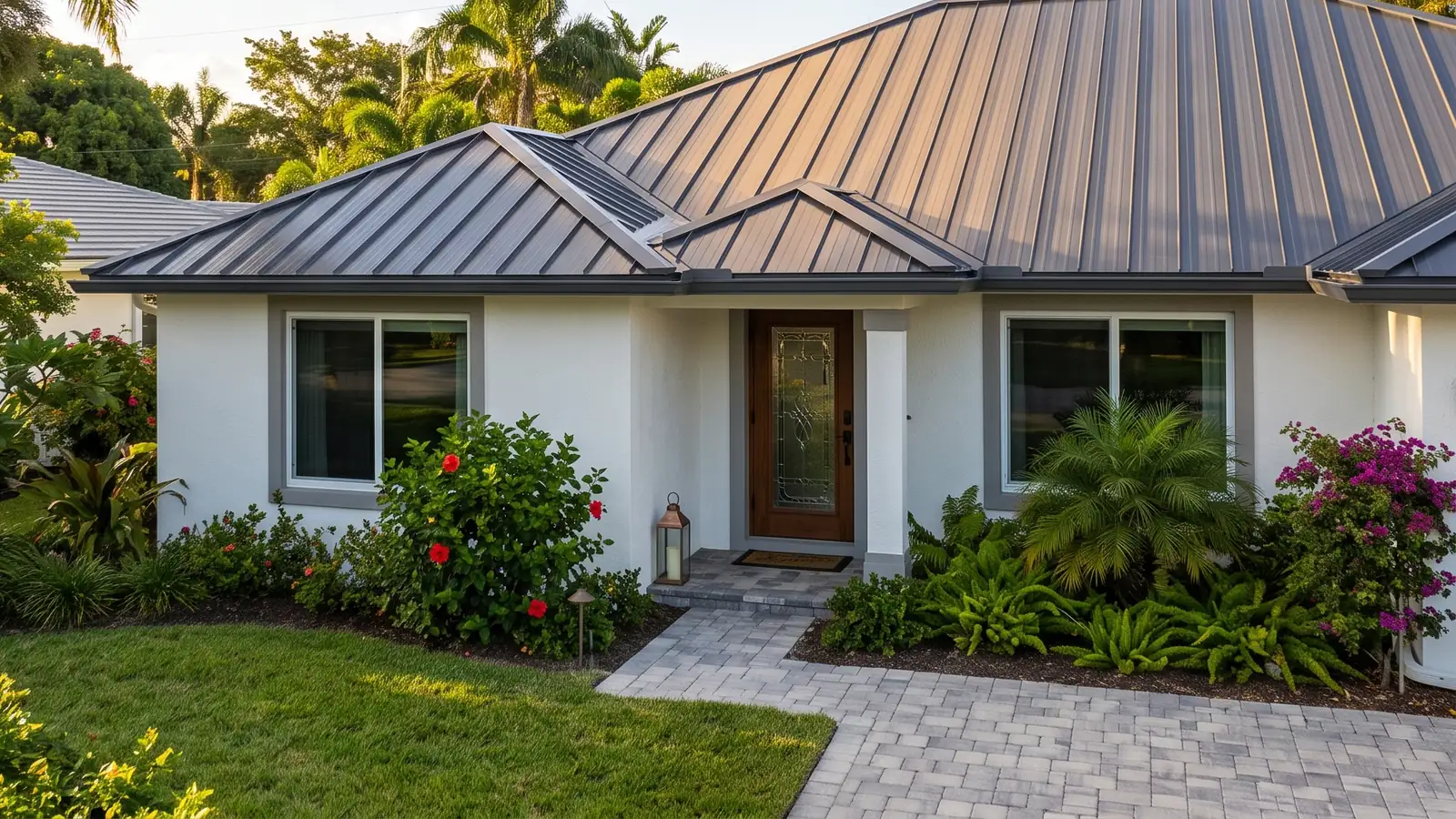
Metal Roof Coating and Restoration Options
The coating is the part you see, but most of the labor, and most of what decides whether it lasts, happens before any coating goes on.
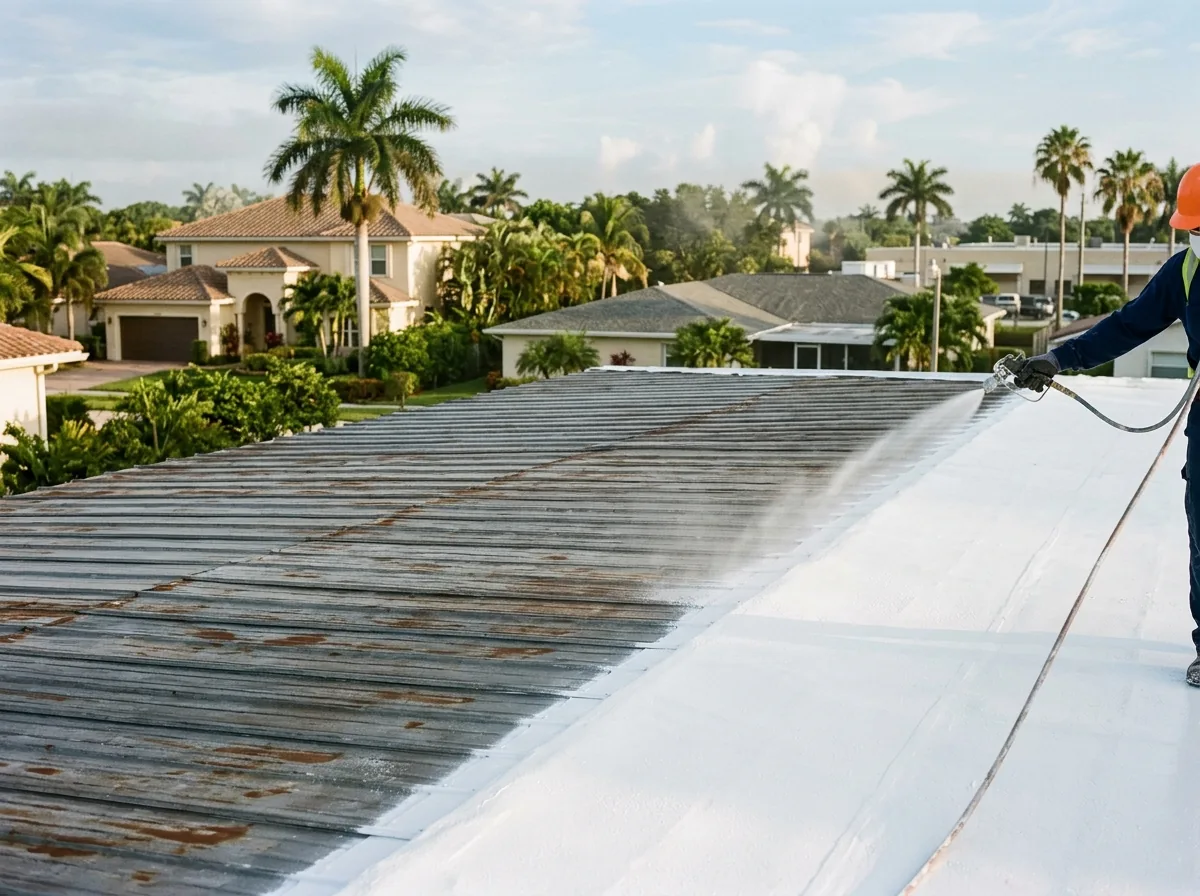
Silicone Roof Coatings
Silicone is the usual pick on low-slope metal where water sits after a storm. It cures by drawing moisture from the air, which suits a humid climate, and manufacturers rate it to resist ponding water. One common product's data sheet calls for two coats at a gallon per 100 square feet each and says it holds up to rain two hours after application. That short rain window matters in a South Florida summer, when afternoon storms can arrive before a slower coating has set.
What comes after matters too. Few materials stick to cured silicone except more silicone, so once a roof is silicone, future recoats will be silicone too. Silicone also picks up dirt more readily than acrylic, which can dull a bright white finish over time.
Acrylic and Elastomeric Coatings
Acrylic elastomeric coatings are water-based and generally cost less than silicone. They suit roofs with enough pitch that water runs straight off. One manufacturer's data sheet for a water-based acrylic lists ponding water as a limitation, says not to apply it when rain is imminent, and says it shouldn't go over silicone. On a steel roof it also calls for a rust primer on steel and on any rusty or corroded metal.
"Elastomeric" describes how the coating stretches and recovers, not a chemistry, so silicone and acrylic coatings are both sold as elastomeric. Ask which one the quote actually specifies.
Metal Roof Painting
Painting is lighter work than a coating system. It suits a roof that's sound and dry but faded, chalky or a color you no longer want, and it goes on thinner than a roof coating. Paint doesn't bridge gaps or seal laps, so it won't stop a leak. The prep is the same as for coating: wash, remove rust, prime bare or rusted steel, and use a paint made for metal roofing. Factory PVDF finishes are slick, so ask the contractor which primer the paint maker requires over them.
Rust Treatment and Seam Sealing Before Coating
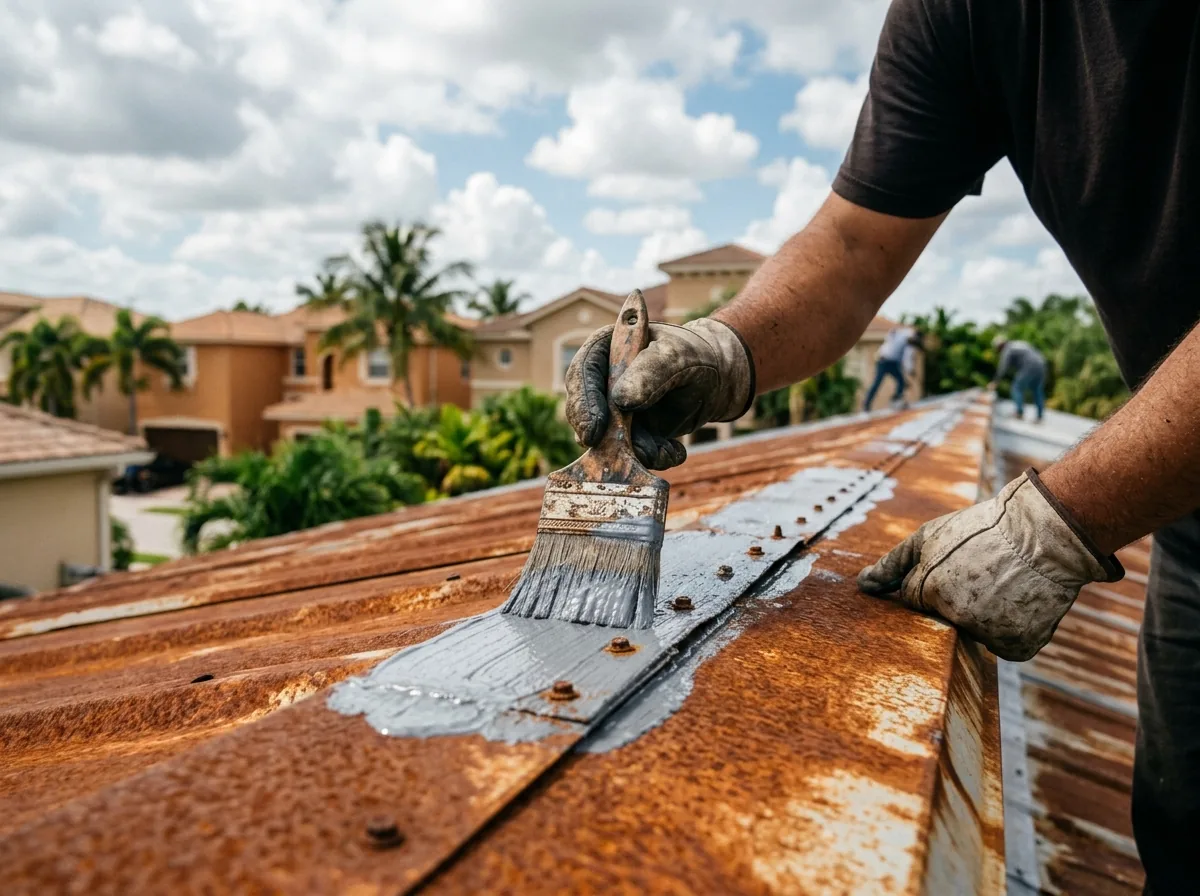
This step is where cheap jobs cut corners. One coating manufacturer's data sheet calls for a surface free of dirt, chalk, loose paint and rust, which usually means a high-pressure wash (one silicone data sheet names at least 2,000 psi), then wire brushing or grinding on the rust spots and a rust primer where bare steel shows.
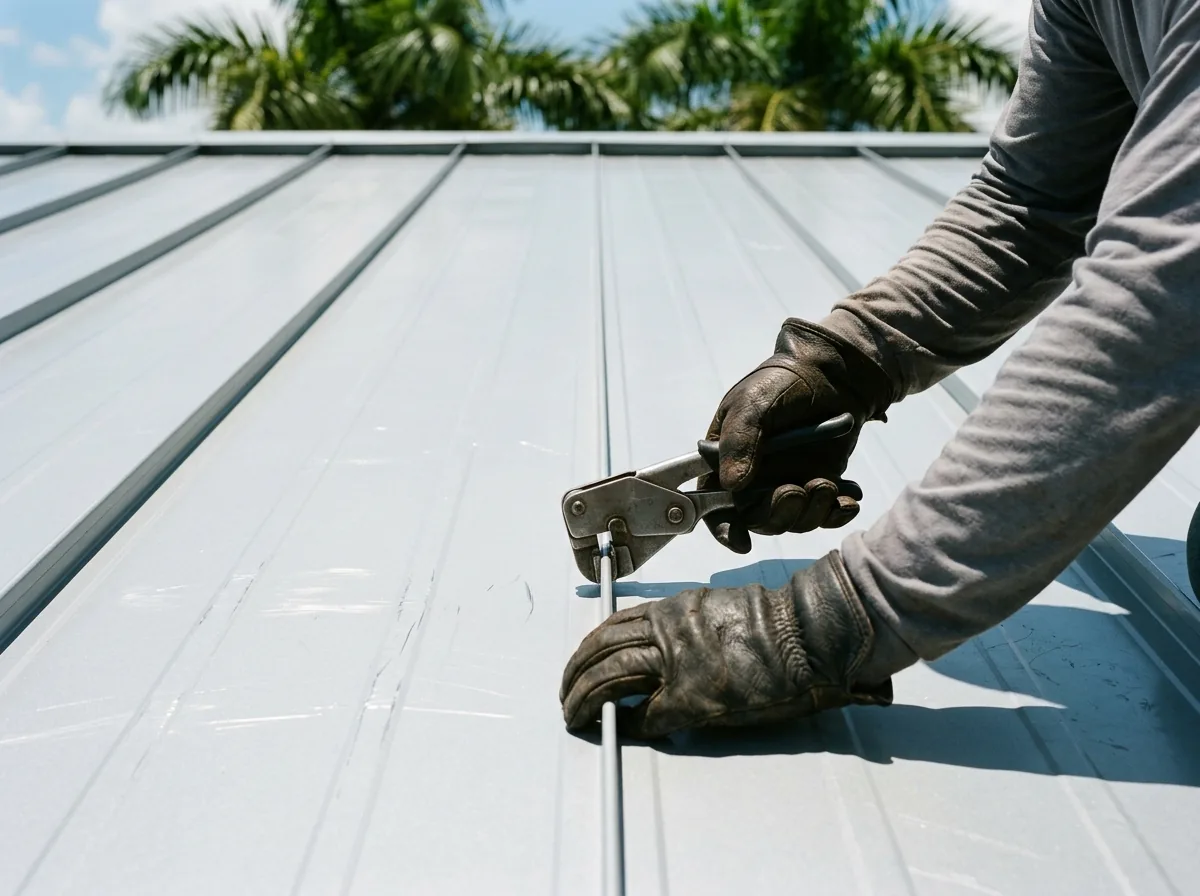
Next come the fasteners. Screws with cracked or flattened washers get replaced, often with a slightly larger screw where the old hole has worn out. Seams, end laps, penetrations and fastener heads are then sealed, usually with a brushed-on seam sealer or a reinforcing fabric set in coating, before the full coat goes over the field.
See metal roof repair.
Why Hollywood homeowners call Hollywood Metal Roofing
- Free written estimate
- Panel, gauge and product approval listed in writing
- City of Hollywood permit and inspections
- One local metal roofing contractor, not a call list
- No charge to homeowners for the referral
When Coating Makes Sense and When It Doesn't
Coating makes sense on an exposed-fastener roof whose panels are still solid: surface rust, faded paint, leaks at screws and laps, but no holes you can push a screwdriver through. At least one Miami-Dade approval for a silicone coating line describes it as approved as "roof maintenance coatings," which is a fair description of the job. It maintains a roof. It doesn't rebuild one.
It's the wrong answer in a few situations:
Rusted-through panels
Coating bridges pinholes and seams, not missing metal. Badly rusted panels need replacing first, and a quote that coats over them is charging you to hide the problem.Wet insulation or a rotting deck
Coating seals the moisture in. Find and fix the source, and replace what's soaked, before anything goes on top.Metal shingles
At least one Miami-Dade approval for silicone roof coatings rules out applying them over metal shingles. Shingle roofs are usually repaired or replaced rather than coated.A roof you'll replace soon anyway
If the building is due for a new roof or a structural change in the near future, spend the money there.
Near the beach and the Intracoastal, coating also buys time on a steel roof whose original finish has worn through, but only if the rust is dealt with properly. Salt keeps working under a coating that went over rust.
Before signing, ask the contractor whether the product has approval for use in the High-Velocity Hurricane Zone and whether the City of Hollywood wants a permit for your job. Some coating approvals also say the product may only be applied by an applicator trained by the manufacturer, so ask whether the crew is.
Cool Roof Coatings (CRRC)
A white or light coating reflects much of the sun that a faded dark roof absorbs, and on an uninsulated metal building that shows up inside. The number to compare is the Cool Roof Rating Council rating. The CRRC measures solar reflectance and thermal emittance on new samples, then again after three years of outdoor weathering at test sites in Arizona, Ohio and Florida.
The aged numbers are the ones to read. Every white coating looks good on day one; the three-year figure tells you how much reflectance is left after years of sun, dirt and mildew in a humid climate. Ask for the CRRC product ID of the exact coating and color in the quote, then look it up in the CRRC Rated Products Directory. ENERGY STAR stopped certifying roof products in 2022, so an old ENERGY STAR logo on a spec sheet no longer tells you anything current.