
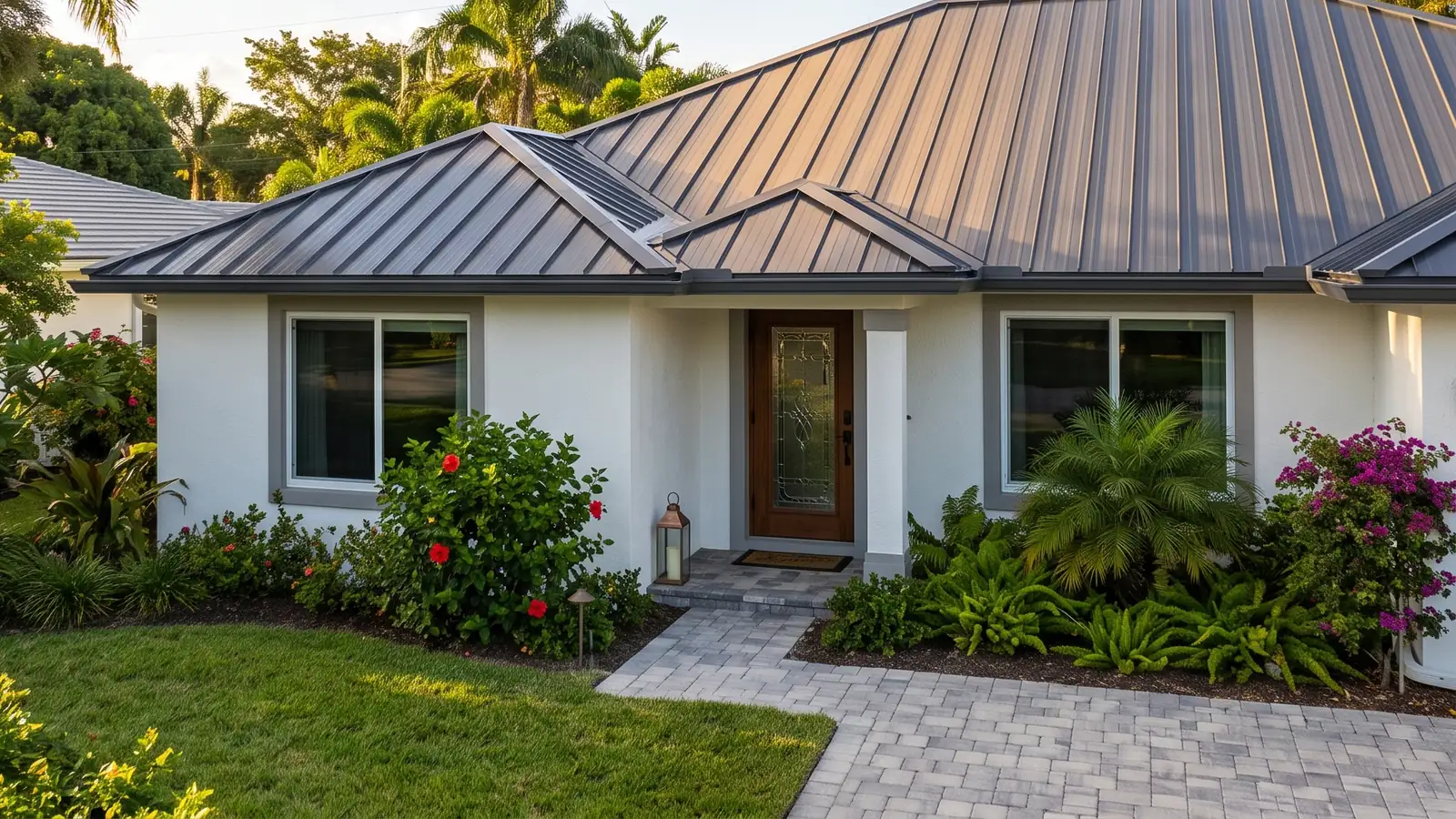
Metal Roof Replacement Options
Replacing a metal roof is a different job from putting metal on a house for the first time. The old panels are usually still there, still screwed down, and often still mostly watertight, so the first question is how much of the roof really has to go.
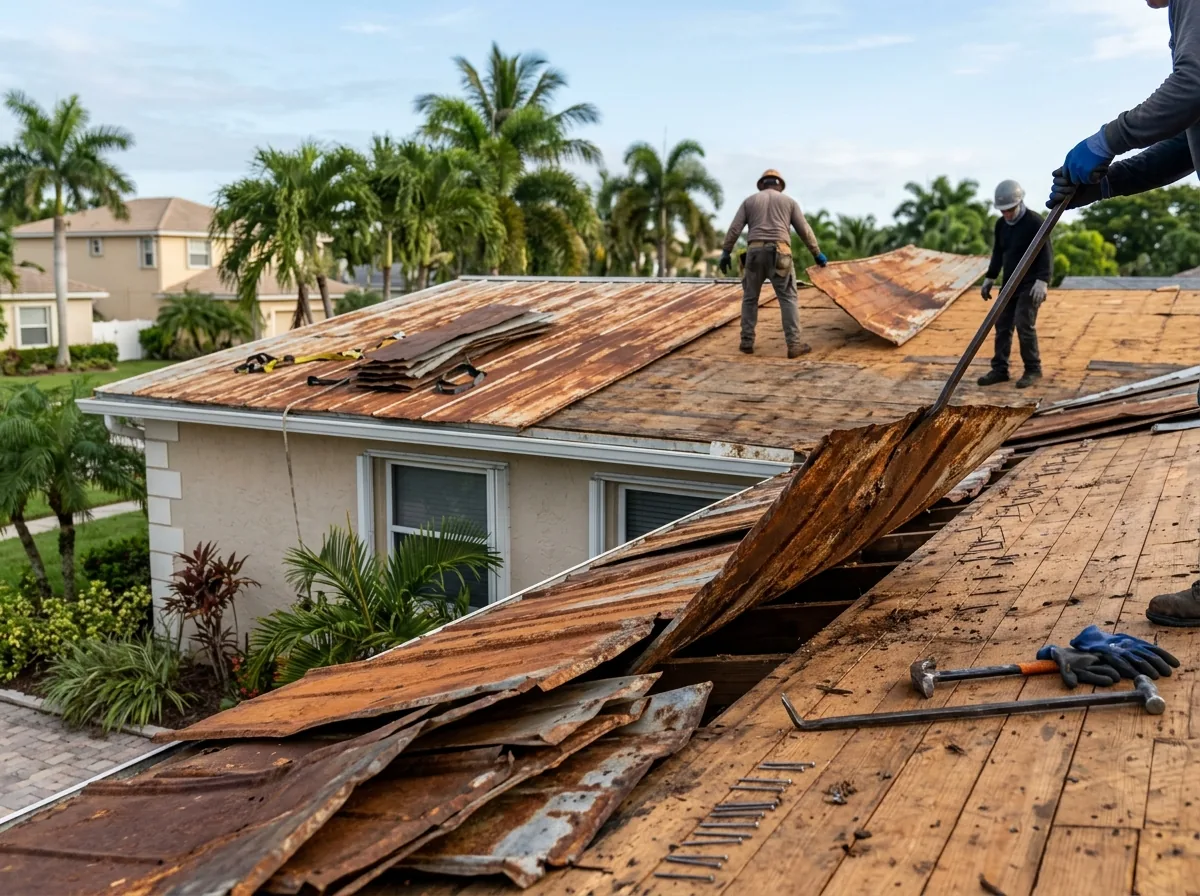
Full Tear-Off and New Metal Roof
A full replacement strips the old panels, trim and underlayment down to the deck. On a roof that's been leaking at the fasteners for years, this is where the hidden damage shows up: dark, soft sheathing around old screw holes, rusted nails, rotted fascia under a failed drip edge. All of that gets fixed before the new underlayment goes down.
Tearing off old metal has one advantage over tile or shingles: the old panels can go to a scrap metal recycler instead of a landfill, and some contractors reflect the scrap value in the price. Ask whether yours does.
The new roof goes on to today's High-Velocity Hurricane Zone rules. An older roof may have thinner panels, wider fastener spacing or an underlayment that no current approval would name. The replacement will usually look similar from the street and be a very different roof underneath.
Partial Replacement of Damaged Sections
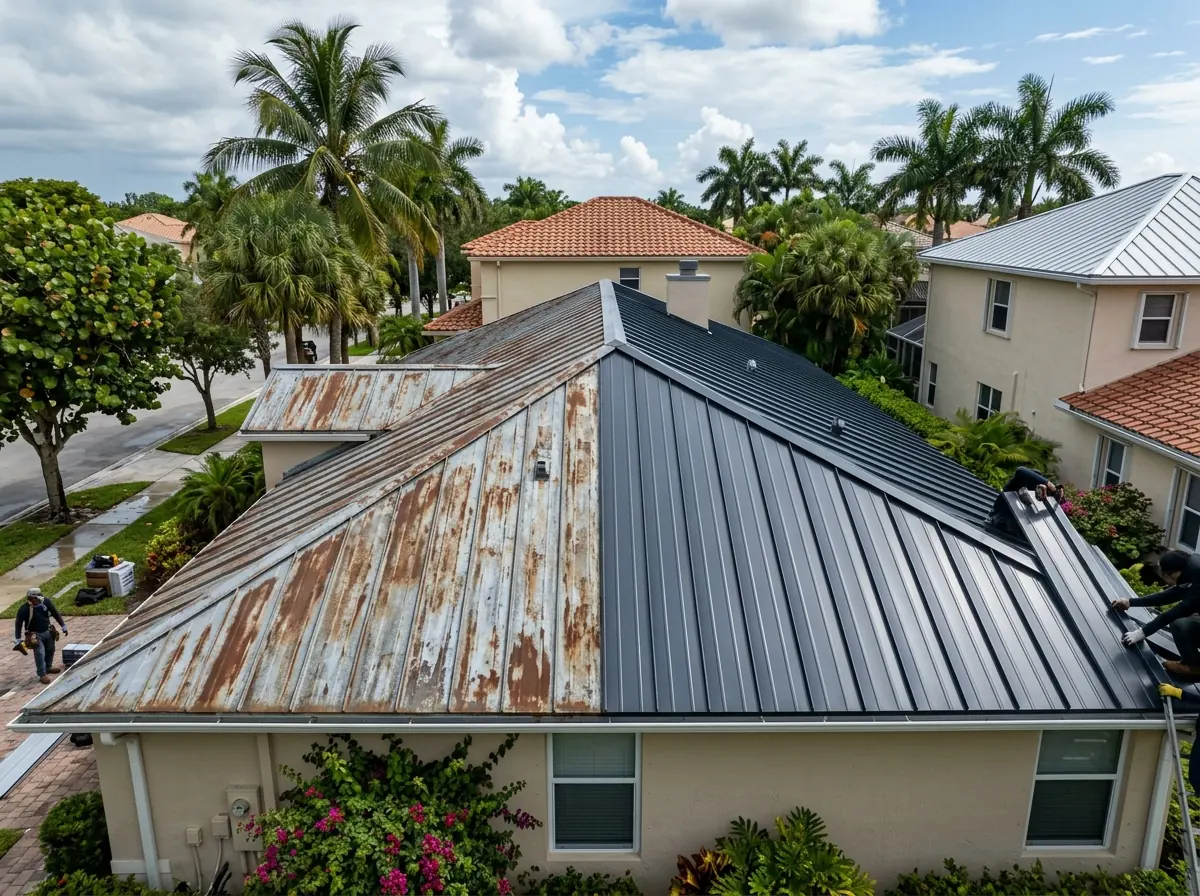
When a storm damages one slope, or rust is confined to one area such as the side facing the ocean or below a tree, replacing only that section can make sense. The contractor removes the damaged panels, repairs the deck beneath and installs new panels matched to the rest of the roof.
Two things limit this. First, matching: the new panels need the same profile, gauge and metal as the old, and discontinued profiles are common on older roofs. New paint will also look brighter next to a faded roof. Second, Florida's 25% rule, covered below, which can turn a large partial job into a full one on an older roof.
For smaller problems such as leaking screws, open seams or a single dented panel, see metal roof repair.
Upgrading From 5V to Standing Seam
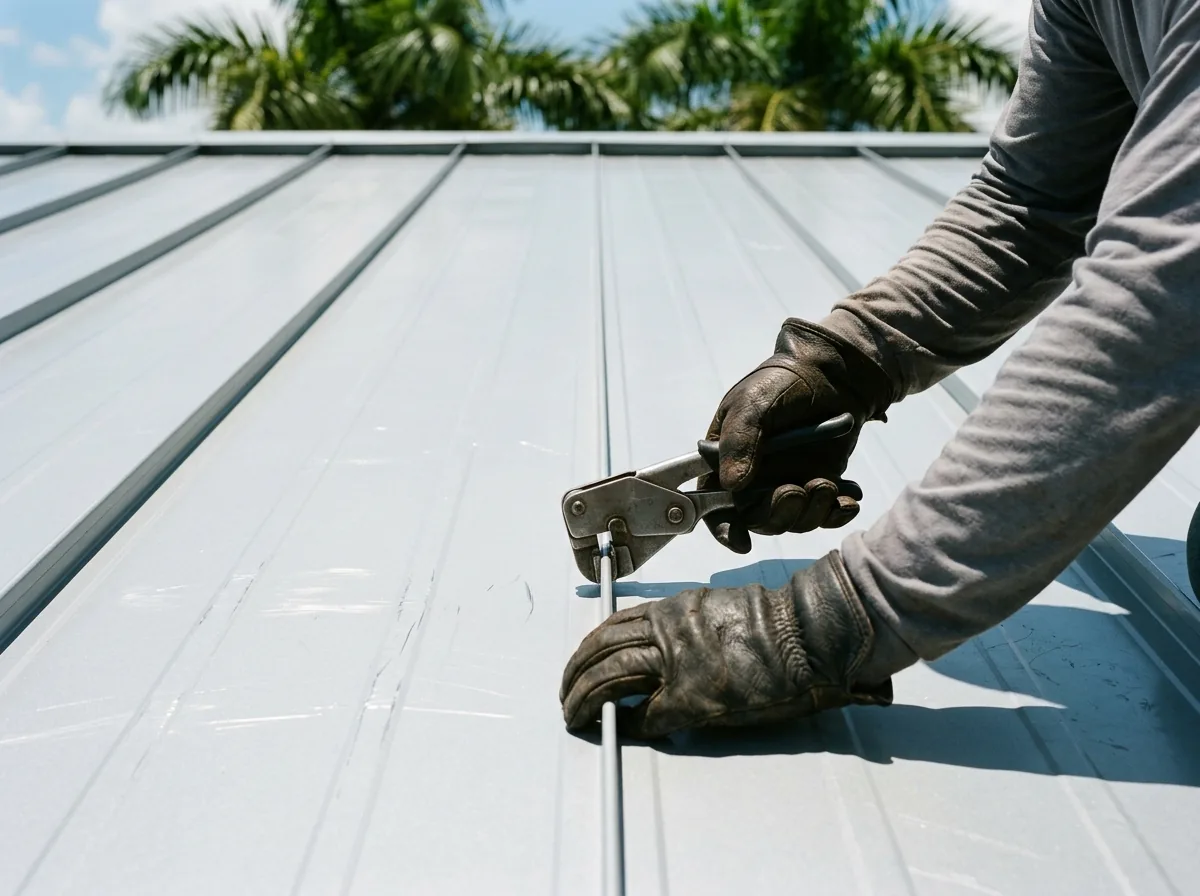
Old 5V crimp roofs are common candidates, usually because the owner is tired of chasing leaking screws. Moving to standing seam takes the fasteners out of the flat of the panel; hidden clips hold it down instead. It costs more than putting 5V back, and it isn't the only sensible choice. A new 5V roof with heavier panels and quality fasteners is a solid, cheaper option, as long as you plan for fastener upkeep.
If you're near the water, the replacement is also the time to switch from steel to aluminum. See standing seam metal roofs and 5V crimp metal roofing.
Why Hollywood homeowners call Hollywood Metal Roofing
- Free written estimate
- Panel, gauge and product approval listed in writing
- City of Hollywood permit and inspections
- One local metal roofing contractor, not a call list
- No charge to homeowners for the referral
When a Metal Roof Needs Replacing
Metal roofs don't usually fail all at once. They wear out in ways you can see if you know where to look, ideally with binoculars from the ground or through photos from a contractor rather than walking on the roof yourself.
Rust holes, not rust stains
Surface rust can be treated. Metal that flakes away or shows daylight from the attic is finished.Rust along cut edges and laps
On coated steel near salt water, corrosion often starts at panel ends, laps and around fasteners, then spreads.A finish worn to bare metal
Chalky, faded paint is cosmetic at first, but once the coating is gone across the roof, the steel beneath has lost its protection.Leaks that keep moving
Fixing one leak only for another to appear the next rainy season means the whole roof is aging together.Loose or lifted panels after a storm
Wind that has pulled panels or trim loose may have loosened fasteners across the roof too.Soft or stained decking
Sagging between rafters or dark stains on the underside of the sheathing mean water has been getting in for a while.
If only one or two of these apply to a small area, a repair may still be the better value. We ask the contractor to say plainly which it is and why, with photos.
Florida's 25% Rule and Partial Replacement
In the High-Velocity Hurricane Zone, Section 1521.4 of the Florida Building Code says no more than 25% of a roof or roof section may be repaired, replaced or recovered in any 12-month period unless the covering on the entire roof or section is brought up to current code. Taken on its own, that would turn many partial metal replacements into full ones.
Section 553.844(5) of the Florida Statutes narrows it. If the existing roof was built, repaired or replaced under the 2007 Florida Building Code or later, replacing 25% or more only requires the replaced portion to meet current code. The rest of the roof can stay as it is.
What that means for a Hollywood metal roof:
Roofs built to the 2007 Florida Building Code or later
(that edition took effect March 1, 2009). A partial replacement of a damaged slope is usually possible, with the new section built to current HVHZ standards.Older roofs
Once the work goes past 25% within a year, the code can require the entire roof or roof section to be replaced to current code.Unknown age
Your last roof permit date settles it. The City of Hollywood's permit records, or a previous wind mitigation inspection, are the places to look.
Any new section, full or partial, needs a City of Hollywood permit and has to use a product-approved system. The contractor normally pulls that permit through the City's Accela Citizen Access portal. Keep the permit and the approval number afterwards: the inspector filling in your next wind mitigation form will ask for them.