
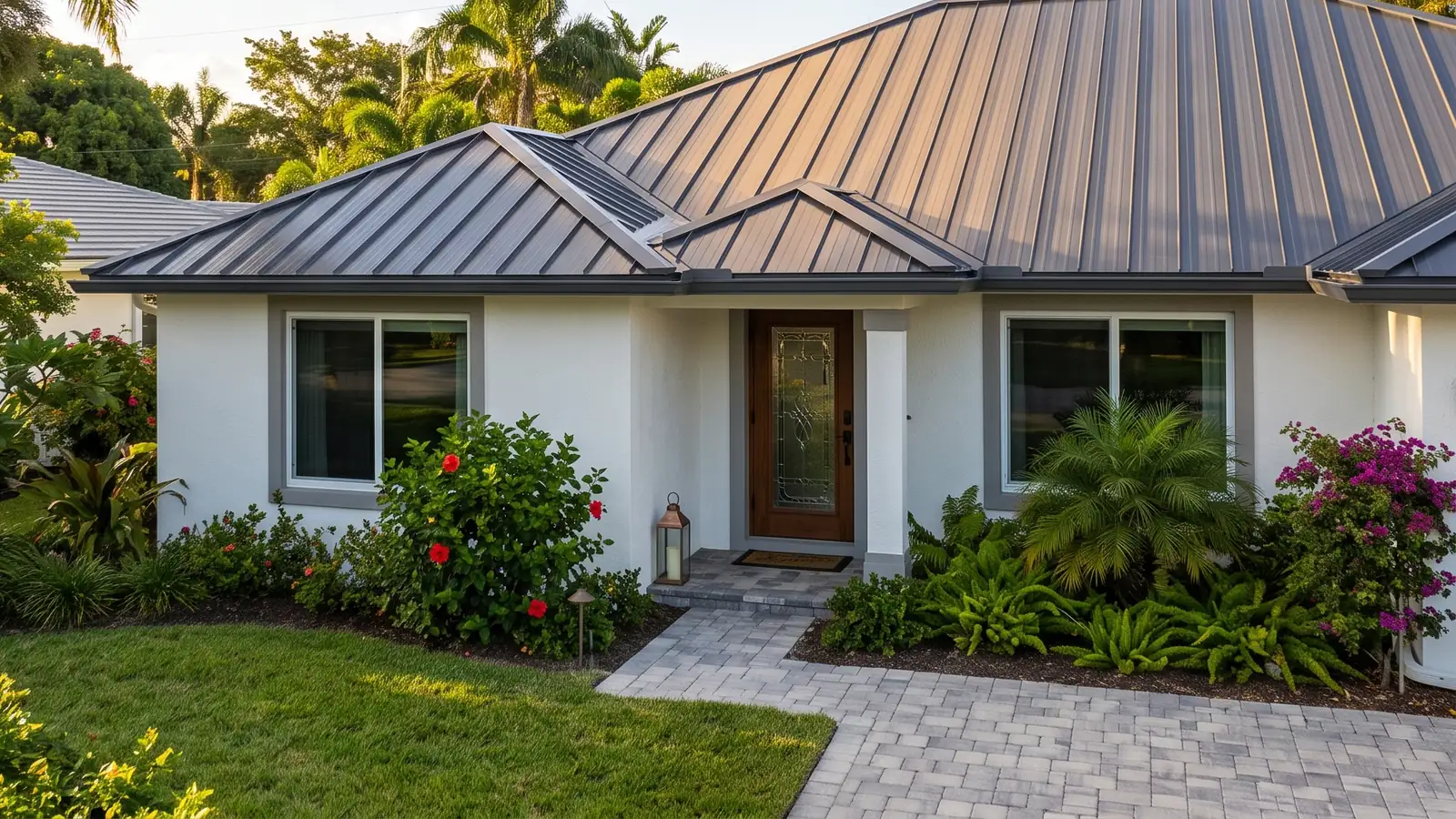
Metal Roof Repairs We Get Asked About
A metal roof in Hollywood rarely fails across the whole panel. The trouble is usually a detail that has aged, moved or been hit.
Fastener and Washer Replacement
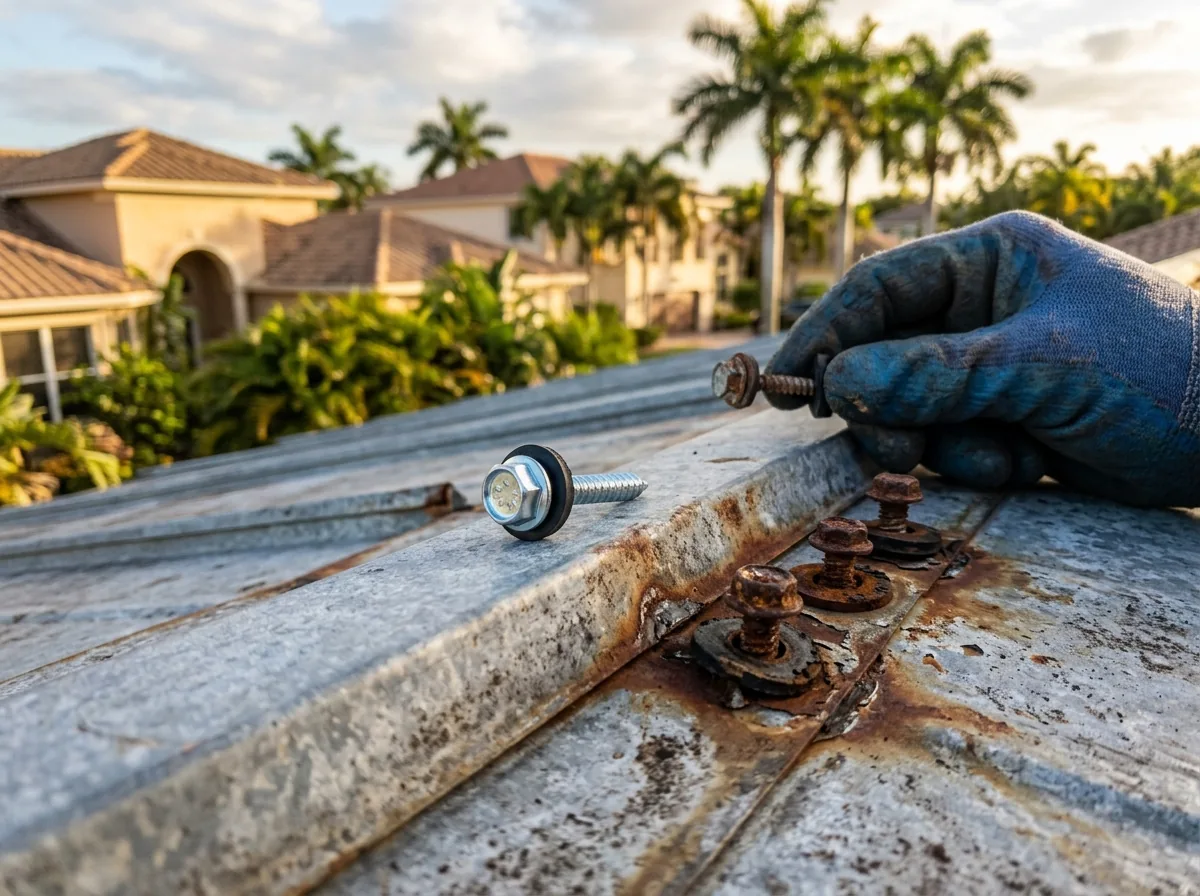
On a 5V crimp or R-panel roof, every screw is a potential leak. The rubber washer under each head keeps water out, and years of South Florida sun dry it, shrink it and crack it. Screws also back out a little as panels expand and contract through each day.
The repair is simple to describe and tedious to do: remove the worn screws and drive new ones with fresh washers, often one size up so they bite into sound wood instead of the old, widened hole. A contractor who only tightens the loose ones is putting off the job. Near the beach, ask for stainless or coated fasteners suited to salt air, because a plain steel screw can rust out faster than the panel around it.
Seam and Lap Repairs
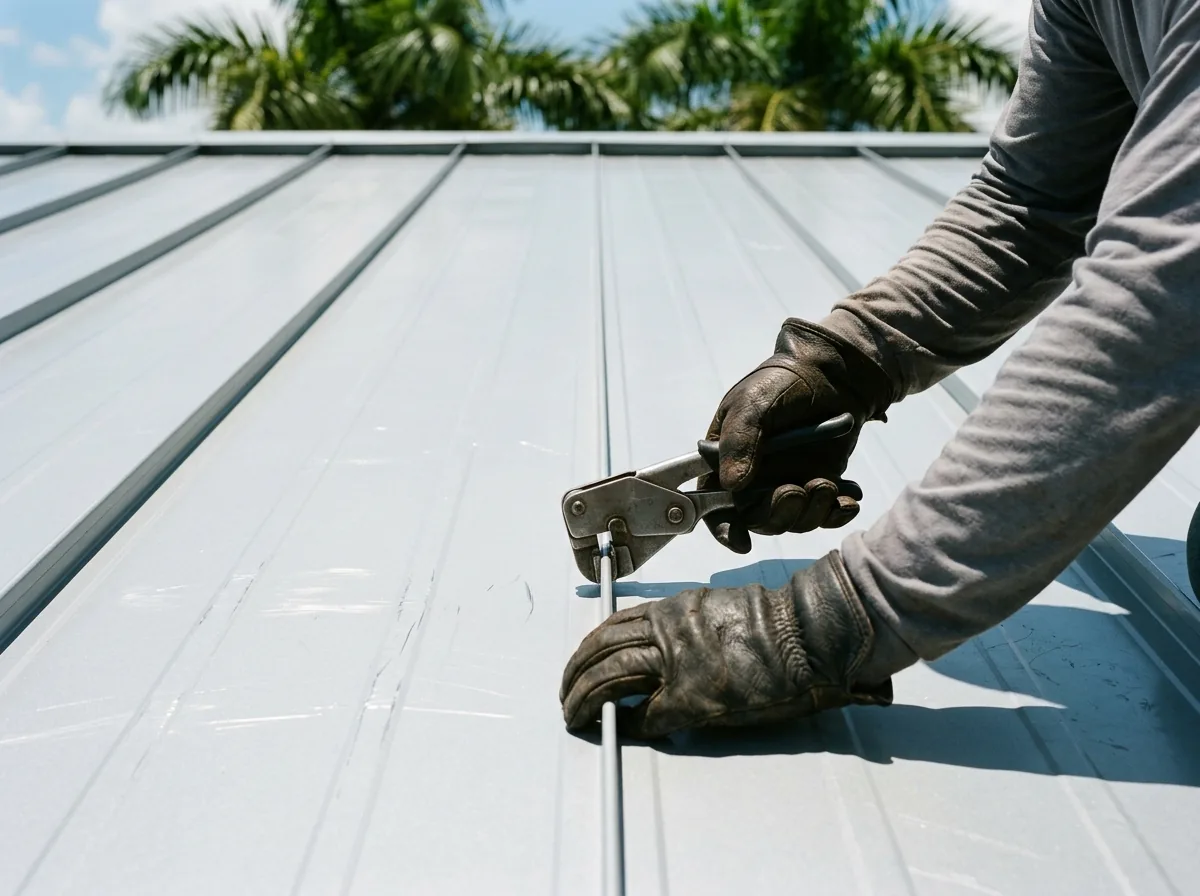
On standing seam, a seam that has partly opened, often after wind has worked at an eave or rake, can be re-seamed with a hand seamer if the metal isn't torn. Split or kinked seams usually mean a panel section has to be replaced. On exposed-fastener roofs, the side laps and end laps between panels depend on sealant tape and stitch screws. When the sealant dries out, water blows in sideways during a storm, which is why some leaks show up only in driving rain. Caulk smeared over an open seam or a dried lap will buy a season at most; the lasting fix is re-seaming, new sealant tape or new stitch screws.
See standing seam metal roofs for how the seams are built.
Flashing, Pipe Boot and Penetration Leaks
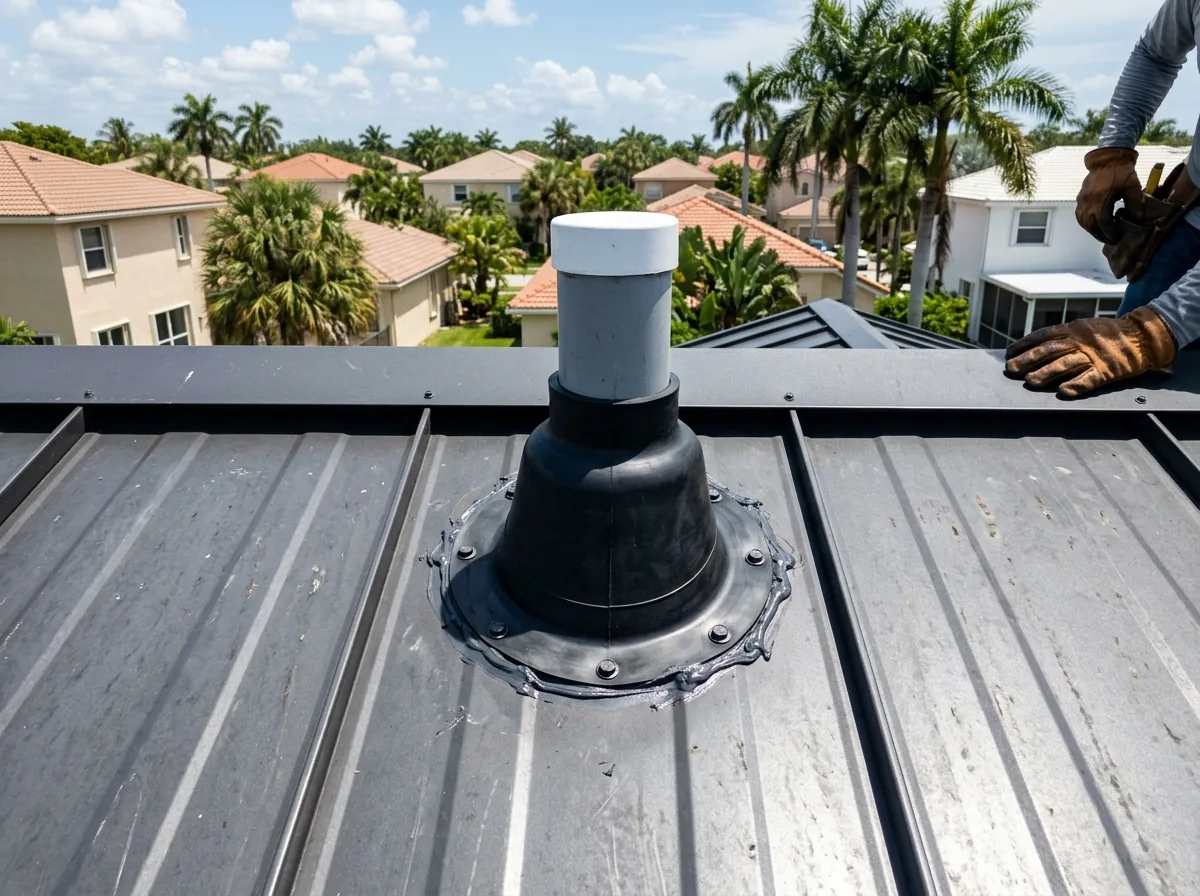
This is a common place for a metal roof to start leaking. Rubber pipe boots crack in the sun. Wall and chimney flashing relies on sealant that hardens and pulls away. AC stands, solar mounts and satellite brackets add holes that weren't part of the original roof. Water that gets in at one of these can travel along the deck and drip several feet away.
A proper fix replaces the boot or flashing piece rather than smearing new caulk over the old. On standing seam, penetrations should be flashed so water runs around them, not into a seam.
Storm-Damaged Panels and Trim
Hurricane and thunderstorm wind usually attacks the edges first: drip edge, rake trim, ridge caps and eave panels. Once one piece lifts, the next gust gets under it. After a storm, lifted trim may need temporary securing or a tarp before the permanent repair. Dents from branches and debris are often cosmetic on steel, but a dent that has cracked the finish or opened a seam needs attention.
In the hurricane zone the code requires repair materials to carry their own product approval, so ask what the replacement pieces are approved under.
After a named storm, expect door knockers from out of the area offering quick roof fixes. Look the company up on myfloridalicense.com before you sign anything or hand over a deposit, and check that the licence is active and matches the name on the contract.
Rust Spots and Scratches
Surface rust shows up where the coating on steel has been cut, scratched or worn, and at cut edges near salt water. Small spots can be cleaned, treated and touched up with the manufacturer's matching paint. Rust that has eaten through the metal isn't a touch-up job. If rust is widespread on an older exposed-fastener roof, see metal roof coating.
Why Hollywood homeowners call Hollywood Metal Roofing
- Free written estimate
- Panel, gauge and product approval listed in writing
- City of Hollywood permit and inspections
- One local metal roofing contractor, not a call list
- No charge to homeowners for the referral
Metal Roof Repair or Replacement?
A repair makes sense when the panels are sound and the problem is a detail: washers, a boot, a stretch of trim, a few damaged pieces. Replacement starts to make more sense when the same roof keeps producing new leaks in new places, when rust has gone through panels in several areas, or when the finish has worn off across the whole roof.
Florida's 25% rule is the other piece. Section 1521.4 of the Building Code limits how much of a hurricane-zone roof can be repaired or replaced in any 12-month period, 25% of the roof or roof section, before the entire roof or section has to be redone to current code. Section 553.844(5) of the Florida Statutes softens that for newer roofs. If yours went on, or was last repaired or replaced, under the 2007 edition of the code or a later one, the new work has to meet current code and the rest of the roof can stay as it is, even past 25%.
So the age of the roof matters. On an older metal roof, a large storm repair can turn into a full replacement you hadn't planned on. Find your last roof permit date before you ask for quotes; it tells the contractor which rule applies.
Some other signs point toward replacing rather than patching:
Rust through
Holes or flaking metal, beyond surface staining, on more than an isolated panel.Repeated repairs
New leaks appearing each rainy season after earlier fixes.Worn finish everywhere
Chalky, faded paint and bare metal across the roof, not in one spot.Soft deck
Spongy areas underfoot mean water has been getting into the wood for a while.Old, thin panels
Material below today's HVHZ minimums, 26 gage G-90 steel or 0.025-inch aluminum, won't match anything current.
See metal roof replacement for partial and full replacement.
What a Metal Roof Repair Visit Covers
A useful repair visit does more than look at the stain on your ceiling. It should cover:
Finding the entry point
Checking the attic or ceiling below, then tracing uphill on the roof to where the water actually gets in. The two spots are often some distance apart.Checking the whole roof, not only the leak
Fasteners, laps, seams, boots and trim nearby tend to be the same age and in the same shape.Photos
Close shots of the problem and the surrounding area, dated. You'll want them for an insurance claim and for comparing quotes.A written scope
What will be replaced, with what materials, and at what price, before work starts.Permit status
In the hurricane zone, Section 1512.3 of the Building Code requires a permit for repair and maintenance of roofing components, apart from the limited exemptions in Section 105. The contractor should tell you whether your repair needs one and pull it through the City of Hollywood.Temporary protection if needed
A tarp or temporary securing of loose trim when the permanent repair has to wait for materials.
If the contractor recommends replacement instead of repair, ask them to show you why on the photos. A good contractor will give you both prices when both are realistic.