
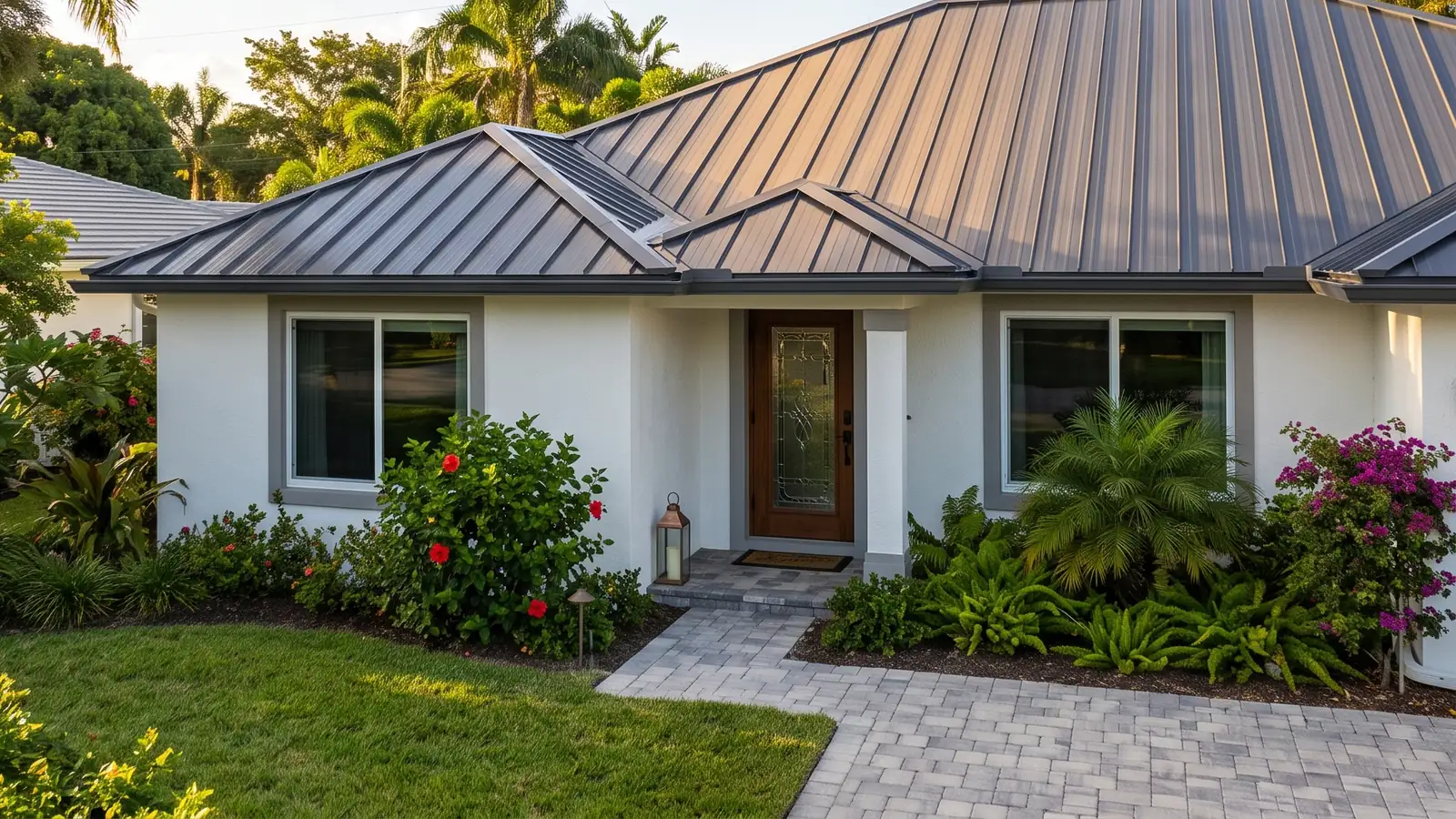
Exposed-Fastener Metal Roofing Types
These panels share one idea: overlap the edges, drive screws through the face. What changes is the rib shape, the panel width, and whether the roof sits on plywood or on open framing.
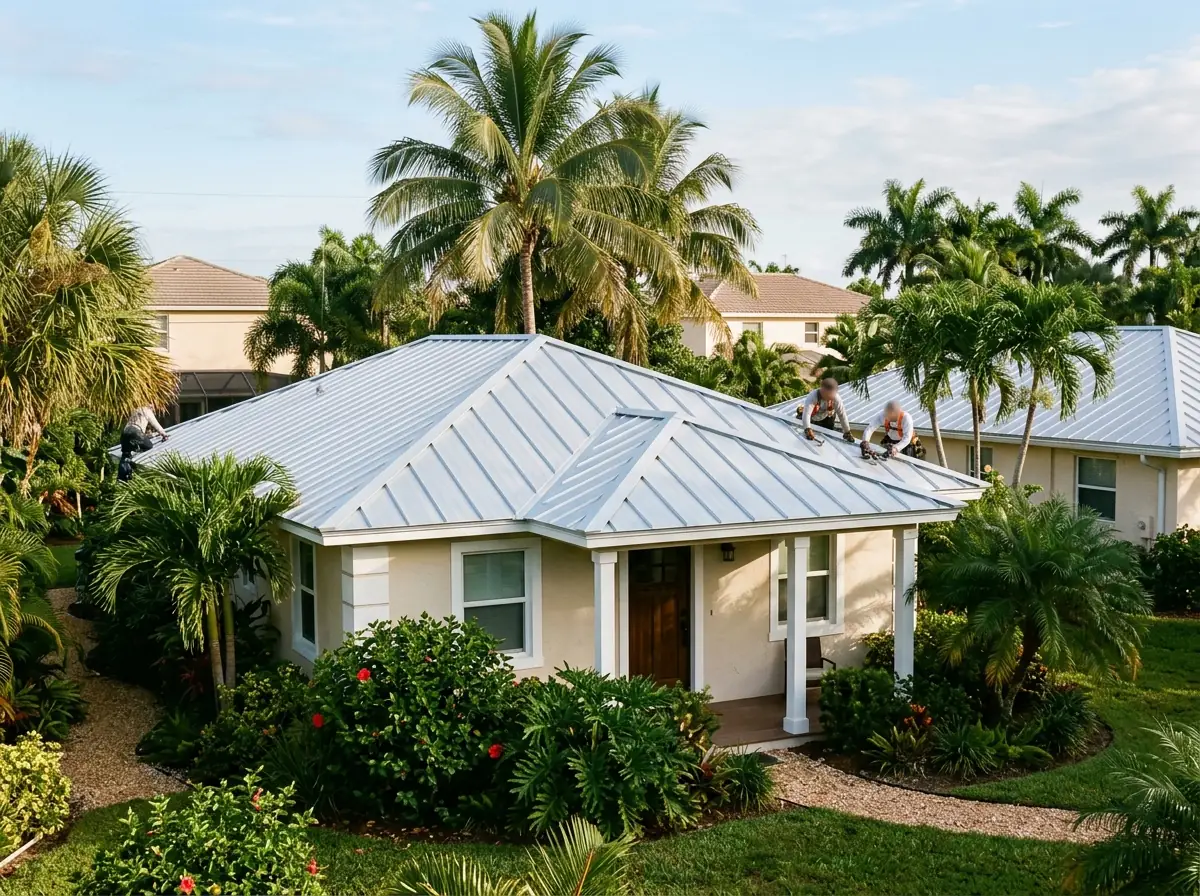
5V Crimp Panels
A 5V panel is mostly flat with five low V-shaped crimps. The edge crimps overlap the next panel, and the screws go through the flat and the laps. On a house it goes over solid plywood with underlayment; the approval we checked requires a plywood deck.
The details come from the system's approval. One current Miami-Dade approval for a 26-gauge steel 5V system gives the specifics: 24 inches of coverage per panel, half-inch ribs, #9-15 self-drilling screws 1-1/2 inches long with sealing washers, long enough to come through the sheathing at least 3/16 inch. In one of its approved patterns, screws run every 16 inches up the field of the roof and every 8 inches at the perimeter and corners. Panels have to run in one piece from eave to ridge.
The same approval sets the deck. New construction needs plywood of at least 19/32 inch. A reroof can keep thinner existing plywood, down to 15/32 inch, but then the deck gets extra 8d ring-shank nails at 6 inches on center on top of its old nailing. Screws only hold as well as the wood they bite into, so that renailing is part of what the wind rating assumes.
The eave-to-ridge rule in that approval is worth asking about: if a quote shows short panels stacked up the roof, ask whether the approved system allows end laps.
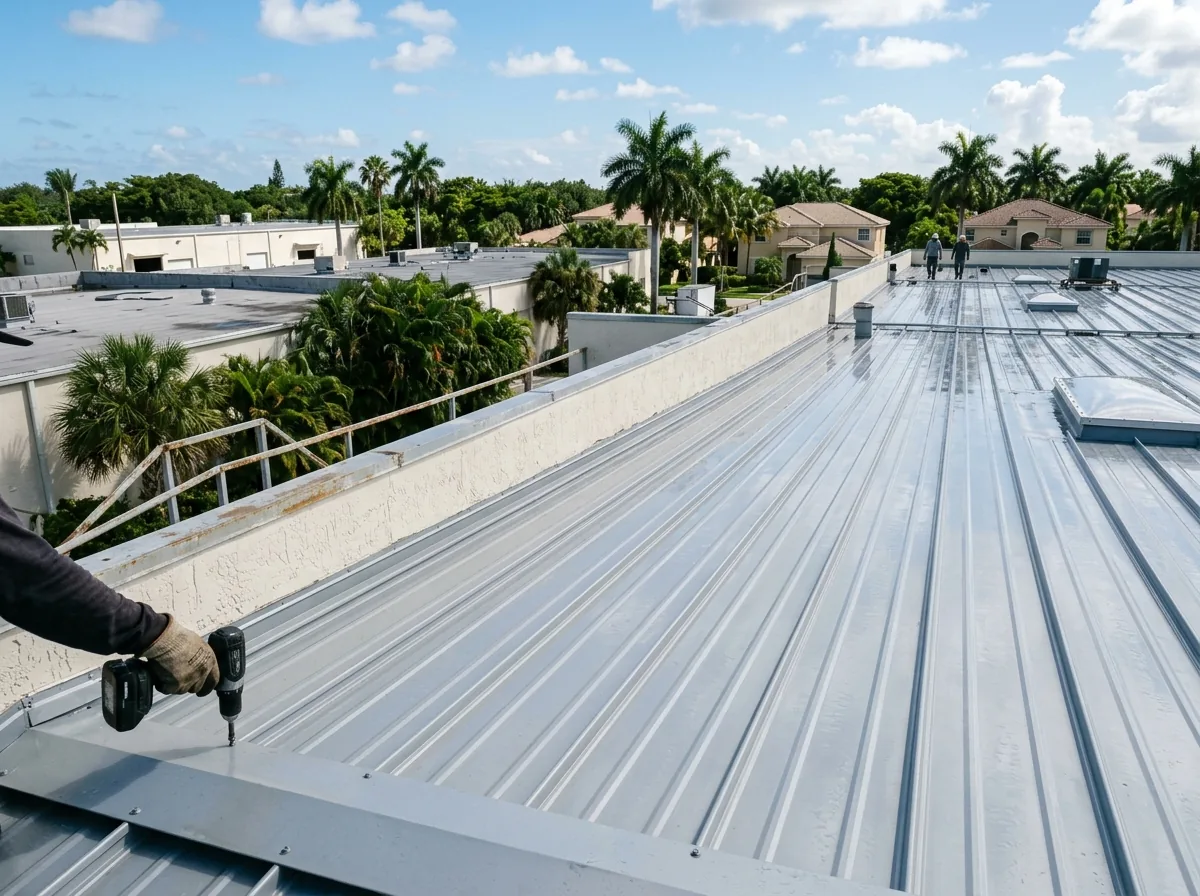
R-Panel and PBR Panels
R-panel has taller trapezoidal ribs and is built for metal buildings. One major manufacturer's PBR panel, where PBR stands for purlin bearing rib, covers 36 inches with 1-1/4 inch ribs set 12 inches apart, and fastens directly to purlins or joists. The extra leg at the lap sits on the purlin and supports the overlap.
It belongs on warehouses, workshops, carports and barns, and it's also used for retrofits over old metal building roofs. On a house it looks industrial. That manufacturer lists a 1/2:12 minimum slope, but in Hollywood the product approval and the code's HVHZ table decide what's allowed. See commercial metal roofing.
Corrugated Metal Roofing
Corrugated is the rounded, wavy profile most people picture when they hear "tin roof." It shows little oil canning because the whole sheet is curved. The fastening works the same way as 5V, screws and washers through the face, so it needs the same upkeep.
It suits sheds, cabanas and outbuildings. For the main roof of a house, we'd look at 5V first, and any corrugated product used in the hurricane zone needs its own HVHZ approval.
Why Hollywood homeowners call Hollywood Metal Roofing
- Free written estimate
- Panel, gauge and product approval listed in writing
- City of Hollywood permit and inspections
- One local metal roofing contractor, not a call list
- No charge to homeowners for the referral
Exposed Fastener vs Standing Seam
The case for 5V is price. HomeGuide puts a typical corrugated roof at $6,000 to $22,000 installed, against $13,500 to $40,000 for standing seam (HomeGuide). Those are corrugated figures; the guide doesn't price 5V separately, though 5V is fastened the same way. Panels are wider, trim is simpler, and there's no seaming.
The costs show up later. Every screw is a hole through the part of the panel that carries water. Screw-down panels also can't slide as the metal heats and cools the way clipped standing seam panels can, so the screw holes take that movement. And the code is stricter on slope. Outside the High-Velocity Hurricane Zone, section 1507.4.2 of the Florida Building Code requires 3:12 for lapped panels without lap sealant and 1/2:12 with sealant, while standing seam can go to 1/4:12. Inside the HVHZ, Table 1515.2 sets architectural metal panels at 2:12, and only standing seam that passed a water leakage test may go lower.
Where each one makes sense:
5V
Cottages, Old Florida-style houses, pitched roofs on a budget, owners fine with a maintenance routine.R-panel
Metal buildings, workshops, carports and commercial retrofits.Standing seam
Low-pitch roofs, homes you plan to keep for a long time, and anyone who doesn't want to think about screws. See standing seam metal roofs.
Keeping a 5V Roof Watertight
Most of the upkeep on a 5V roof comes down to the screws and the trim.
A 5V roof leaks at its screws, its laps and its trim, rarely through the panel itself. Most of that is preventable with a look every so often.
What a good check covers:
Washers
Cracked, flattened or hardened washers let water run down the screw shank.Backed-out screws
Heat cycling and wind can loosen screws. A raised head is an open hole.Overdriven screws
A washer crushed flat and squeezed out the sides doesn't seal either. That one's an installation fault.Rust at cut edges and screw heads
Worst near the water, and a sign the fastener metal may not match the panel.Ridge and eave closures
Foam closures under the ridge cap shrink and blow out, letting in wind-driven rain.Trim and flashing
Sealant at walls, vents and pipe boots dries out long before the panels do.
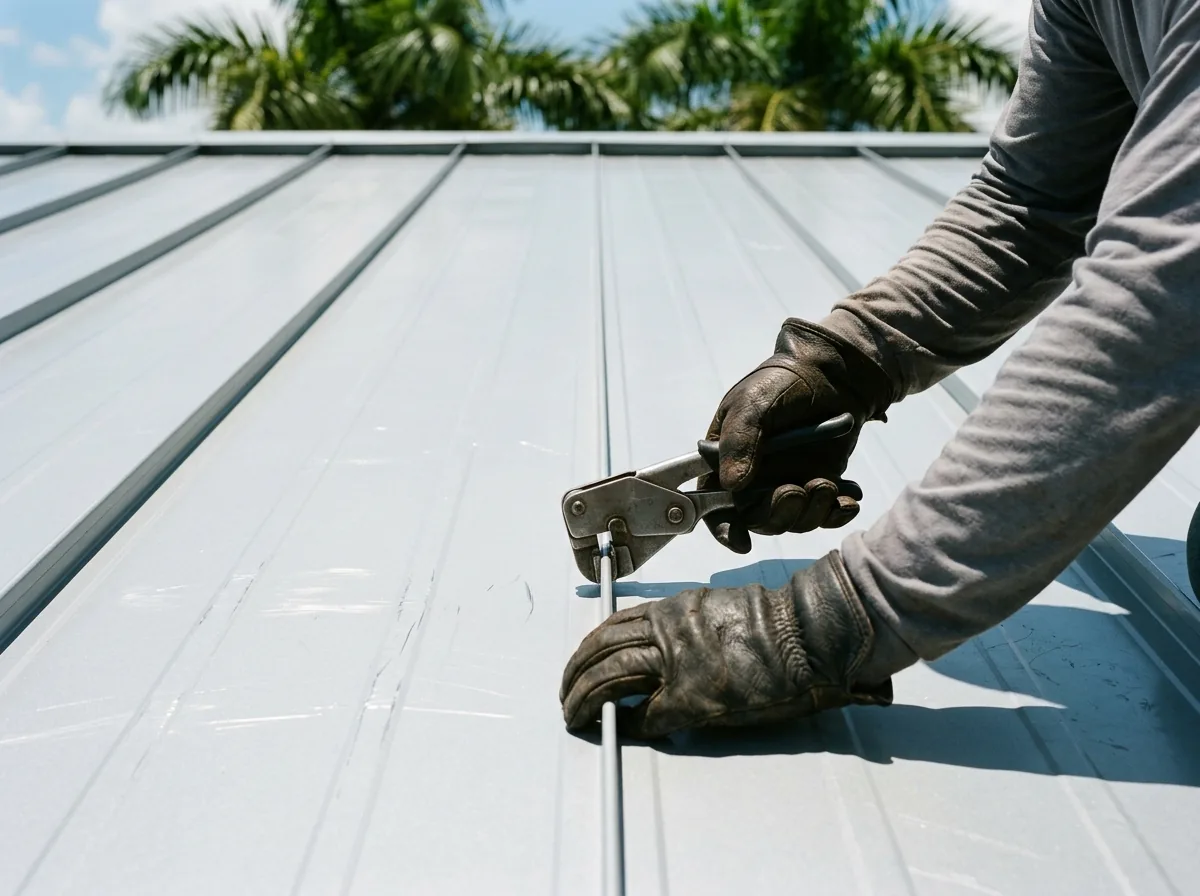
Replacing screws is a common job on older 5V roofs. The contractor often goes up one size in screw diameter so the new screw bites fresh metal and wood, and replaces failed sealant at the same time. If panels are rusted through rather than just stained, screws won't fix it. That's a coating or replacement conversation, depending on how much of the roof is affected.